Young children naturally experience the world through an egocentric lens. This is not a moral failing; it is a normal neurological milestone. Around ages 4 to 5, the brain begins to realize: 'What I see and what you experience may be entirely different.' This is the magical dawn of perspective-taking and empathy.
1. The Symbolism of the 'All-Seeing Glasses'
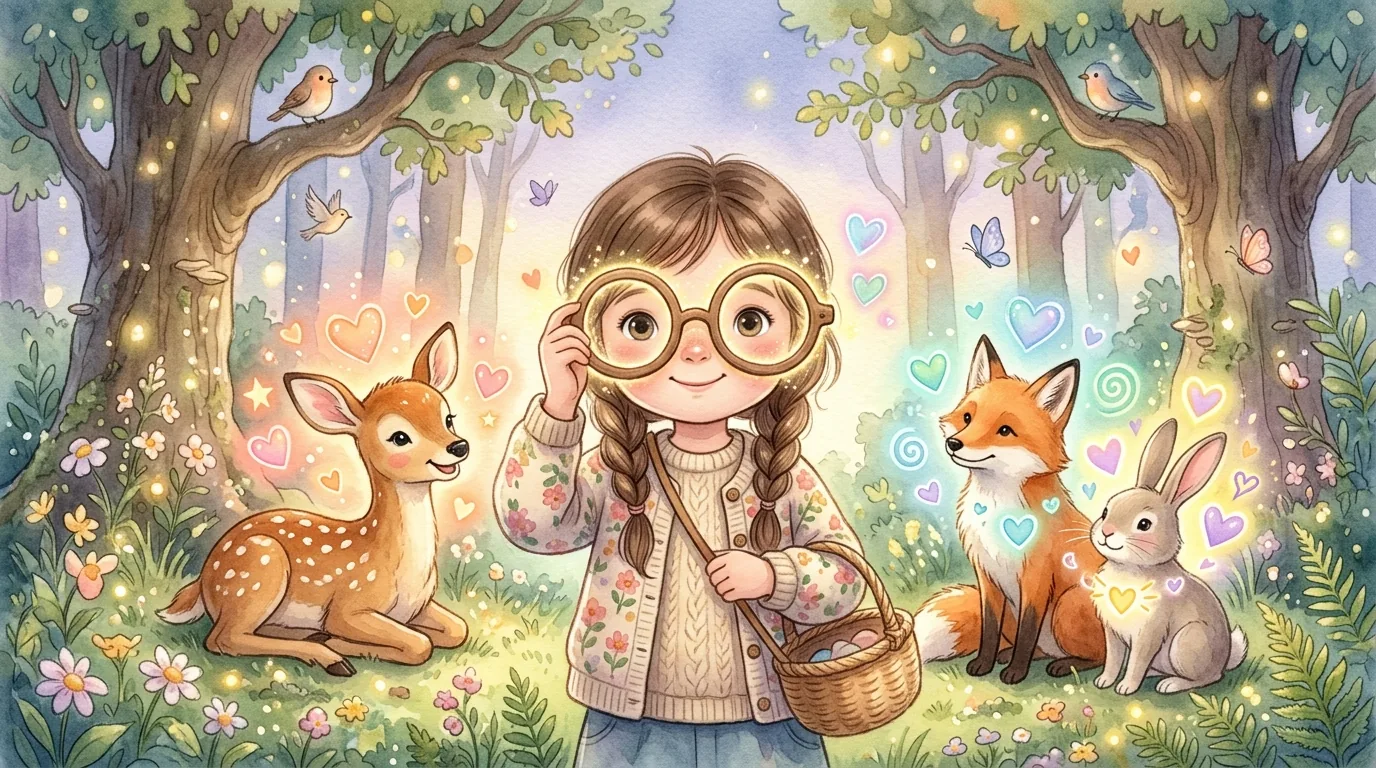
The magical glasses in my book symbolize the empathetic lens innate to every human heart. When a classmate turns silent or a sibling becomes frustrated, slipping on these metaphorical lenses enables us to see the unseen motives behind the behavior.
2. The 'Emotion Detective' Game
A delightful exercise during walks or storytime: 'Notice that small turtle resting on the log—what story might his posture tell today?' Encouraging imaginative emotional inference trains children's empathetic sensitivity.
3. Self-Expression Precedes Empathy
Empathy is reciprocal. A child who is regularly asked: 'How does your heart feel right now?' and whose emotions are welcomed without harsh judgment naturally develops the capacity to extend grace to peers.